
Session 2: Basics of Gene Therapy with Lentiviral Vectors
Session 2: Basics of Gene Therapy with Lentiviral Vectors
Speakers: Annarita Miccio, Giuliana Ferrari, Michaela Semeraro
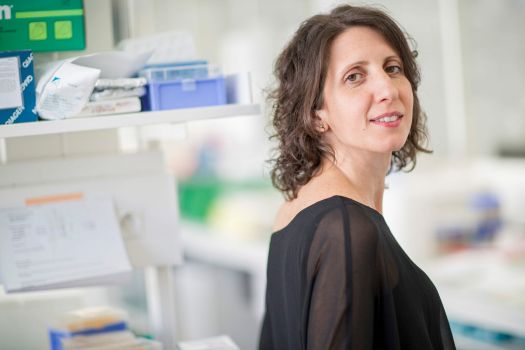
Annarita Miccio
Annarita's main research interests are the transcriptional control of hematopoiesis, and the development of therapeutic approaches to hematologic genetic disorders. As a PhD student with Giuliana Ferrari at TIGET (Italy), she acquired scientific expertise in hematology and in lentiviral (LV) vector technology for the genetic modification of hematopoietic stem cells (HSCs) and other cell types (Bonanomi, J Neurosci. 2005; Cattoglio, Blood, 2007). In this context, she generated a β-globin LV and demonstrated rescue of the thalassemic phenotype in a murine model of the disease (Miccio, PNAS, 2008). This LV has been successfully used in an early clinical trial for β-thalassemia and is currently under clinical development. During her postdoctoral period in Gerd Blobel's lab (CHOP, USA) and later as an assistant professor at University of Modena (Italy), she gained experience in epigenetics and the regulation of gene expression in erythroid development and in evaluating the safety and efficacy of gene therapy approaches for hematopoietic disorders (Miccio, EMBO J, 2010; Miccio and Blobel, Mol Cell Biol., 2010 and Gregory, Miccio, Blood, 2010; Moiani, J Clin Invest. 2012). In 2014, Annarita was appointed as a Lab Director at the Imagine Institute (Paris, France), where she pursued her studies on transcriptional regulation in normal and diseased stem cells and their progeny (Cavazza, Stem Cell Reports, 2016; Romano, Scientific Reports, 2016; Antoniani, Stem Cells Transl Med. 2017; Lagresle-Peyrou, Haematologica, 2018). These basic research studies were instrumental in developing novel LV- and genome editing-based strategies for the treatment of β-hemoglobinopathies. In particular, she has optimized the design of a LV expressing an antisickling transgene that is currently employed in a clinical trial for sickle cell disease expected to start in 2019 (Weber, Mol Ther Methods Clin Dev., 2018). In parallel, she developed CRISPR/Cas9 editing strategies for β-hemoglobinopathies (Antoniani, Blood, 2018; Weber, Science Advances, in press) and optimized the delivery of CRISPR/Cas9 in HSPCs (Lattanzi, Mol Ther. 2018).

Giuliana Ferrari
Giuliana Ferrari is Professor of Molecular Biology and Gene Expression Regulation at the San Raffaele University School of Medicine, Group leader and Director of GLP facility at the San Raffaele Telethon Institute for Gene Therapy (Milan, Italy).
Her fields of interest and research are engineering of viral vectors, transcriptional regulation, development of preclinical models for gene therapy, gene therapy for beta-thalassemia and hematopoietic stem cell biology. She is an internationally recognized expert on gene therapy for hematopoietic diseases and thalassemia and leads the gene therapy clinical trial TIGET BTHAL (NCT02453477).
She has been working in the field of gene transfer and gene therapy for genetic diseases from the beginning of her career. Recently, she accomplished the clinical translation of gene therapy for beta-thalassemia, starting from the development of transcriptionally regulated beta-globin lentiviral vectors to patients' treatment. Along with her research in the field of translational science, she pursues fundamental stem cell research, focused on understanding regulation of hematopoietic hierarchy and erythropoiesis in genetic anemia, and the composition of bone marrow niche and its interaction with hematopoietic stem cells.
She is regularly invited as speaker at national and international scientific meetings. For her scientific achievements in the field of thalassemia, in 2018 Giuliana Ferrari received the prestigious Rosa Camuna Award from Regione Lombardia, that is assigned each year to individuals that made a particular impact in the economic, social, cultural and sport development of the region. In 2021, she has been nominated European Chair of ATMP platform at EATRIS (https://eatris.eu/atmp/).
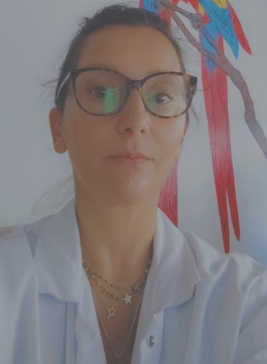
Michaela Semeraro
Professor Michaela Semeraro is a pediatrician and head of the Clinical Investigation Center at Necker Hospital, Paris, a leading hub for pediatric research. An internationally recognized expert in rare diseases and innovative therapies, particularly gene therapy, she has overseen more than 100 clinical trials from early to late phases. She also contributes to translational research within INSERM UNIT 1343 and plays a key role in training the next generation of clinical researchers at Université Paris Cité.