
Session 3: Genome Editing: CRISPR/Cas9 and SCD - How It Works and Its Uses
Session 3: Genome Editing: CRISPR/Cas9 and SCD - How It Works and Its Uses
Speakers: Annarita Miccio, Claudio Mussolino, Mario Amendola
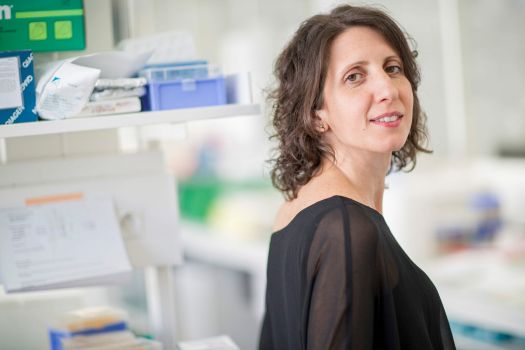
Annarita Miccio
Annarita's main research interests are the transcriptional control of hematopoiesis, and the development of therapeutic approaches to hematologic genetic disorders. As a PhD student with Giuliana Ferrari at TIGET (Italy), she acquired scientific expertise in hematology and in lentiviral (LV) vector technology for the genetic modification of hematopoietic stem cells (HSCs) and other cell types (Bonanomi, J Neurosci. 2005; Cattoglio, Blood, 2007). In this context, she generated a β-globin LV and demonstrated rescue of the thalassemic phenotype in a murine model of the disease (Miccio, PNAS, 2008). This LV has been successfully used in an early clinical trial for β-thalassemia and is currently under clinical development. During her postdoctoral period in Gerd Blobel's lab (CHOP, USA) and later as an assistant professor at University of Modena (Italy), she gained experience in epigenetics and the regulation of gene expression in erythroid development and in evaluating the safety and efficacy of gene therapy approaches for hematopoietic disorders (Miccio, EMBO J, 2010; Miccio and Blobel, Mol Cell Biol., 2010 and Gregory, Miccio, Blood, 2010; Moiani, J Clin Invest. 2012). In 2014, Annarita was appointed as a Lab Director at the Imagine Institute (Paris, France), where she pursued her studies on transcriptional regulation in normal and diseased stem cells and their progeny (Cavazza, Stem Cell Reports, 2016; Romano, Scientific Reports, 2016; Antoniani, Stem Cells Transl Med. 2017; Lagresle-Peyrou, Haematologica, 2018). These basic research studies were instrumental in developing novel LV- and genome editing-based strategies for the treatment of β-hemoglobinopathies. In particular, she has optimized the design of a LV expressing an antisickling transgene that is currently employed in a clinical trial for sickle cell disease expected to start in 2019 (Weber, Mol Ther Methods Clin Dev., 2018). In parallel, she developed CRISPR/Cas9 editing strategies for β-hemoglobinopathies (Antoniani, Blood, 2018; Weber, Science Advances, in press) and optimized the delivery of CRISPR/Cas9 in HSPCs (Lattanzi, Mol Ther. 2018).
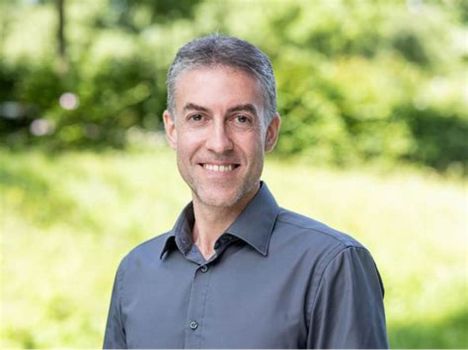
Claudio Mussolino
Group Leader of the resereach group “Genome and Epigenome Editing”
The goal of the research group "Genome and Epigenome Editing" is to further develop and apply designer nucleases and epigenome modifiers for achieving precise modification of the cellular genome and/or epigenome. We seek to use these technologies to tackle chronic and acquired immunodeficiencies as well as cancer.
Patients with congenital and acquired immunodeficiencies suffer from frequent and severe infections. The therapeutic options for these patients include transplantation of blood stem cells collected from a suitable donor, to replace the defective immune system with a healthy one provided by the donor stem cells. However, allogeneic transplantations still pose safety concerns because of the potential severe side effects, such as graft-versus-host disease. Our goal is to develop more efficient gene editing platforms to precisely correct the genetic defect (i.e. the mutation) directly in the patient stem cells. Autologous cells, upon correction, can be transplanted back to the patient thus avoiding the risks associated with allogeneic transplantation. However, for acquired immunodeficiency due to HIV infection, this strategy is not suitable because the virus would infect the new immune system again. In this context, we aim at using genome and epigenome editing strategies to confer new characteristics to the blood stem cells of affected patients as the ability to resist HIV infection. Since the virus enters the target cells (T cells, macrophages) via binding to specific co-receptors, our goal is to use genome and epigenome editing to inactivate the genes encoding for these co-receptors and render the edited cells resistant to HIV infection prior transplant.
The concept of providing new features to the human immune system can be also explored in the context of cancer therapy. Indeed, even a properly functional immunity sometimes fails to recognize aberrantly proliferating cells which may give rise to malignancies. Editing the genome of T cells to express a chimeric antigen receptor (CAR) recognizing tumor-specific antigens can instruct the T cells to recognize and eliminate tumor cells. Since CAR T cells can be hampered by tumor-induced exhaustion, we aim at using epigenome editing technologies to render them resistant to inhibitory signals derived from the tumor microenvironment.
Our group has established genome and epigenome editors based on TALEs (transcription activator-like effectors) and CRISPR/Cas platforms. We apply cutting edge techniques and genome wide approaches to thoroughly evaluate efficacy and safety of the strategies described. Our long-term goal is to develop novel therapeutics for patients suffering from immunodeficiency or cancer and we aim at adapting these methodologies to other congenital disorders of the immune system.
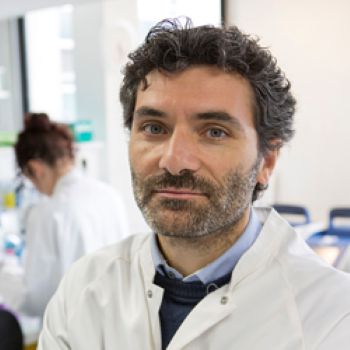
Mario Amendola
Part of the INSERM:
Our laboratory is interested in developing safe and effective genome editing and classical gene therapy approaches to ex vivo modify hematopoietic stem cells (HSC) for the treatment of rare genetic disorders.
The current projects are mainly focused on:
o Correcting hemoglobinopathies, in particular sickle-cell disease and β-thalassemia, by exploiting artificial nucleases to repair the underlying disease causing mutations or to reactivate fetal globin expression.
o Developing new gene therapy approaches for the treatment of clotting disorders, in particular hemophilia A.
o Developing alternative ways to exploit HSC as therapeutic delivery vehicles, due to the ability of their progeny to extensively home to many tissues, including the central nervous system.
o Developing new genetic approaches to provide a fitness advantage to genetically corrected HSC over the affected ones.